Since COVID, fewer people are keeping up with annual checkups. Maybe the pandemic left a lingering wariness of doctor’s offices, or maybe patients simply got tired of hearing bad news. Either way, routine healthcare visits have dropped, and that’s shifting more of the early-detection burden onto every provider a patient does see, including their optometrist.
Most people assume that if they feel fine, they must be fine. But the body can be under serious, silent stress long before any symptom shows up, and diabetes is one of the best examples.
According to the Centers for Disease Control and Prevention, diabetic retinopathy is the leading cause of blindness among working-age adults, and it often develops without any noticeable symptoms in its early stages. A 2023 study led by the CDC’s Vision Health Initiative estimated that 9.6 million Americans, or 26.4 percent of adults with diabetes, already have some degree of diabetic retinopathy.
Diabetes Is a Quiet Disease
Diabetes doesn’t announce itself the way a broken bone or a bad cold does. Blood sugar can run high for months, or years, without producing symptoms a patient would connect to their eyes or their overall health.
That’s exactly why routine screening matters so much: It catches what the patient can’t feel.
High blood sugar doesn’t just affect energy levels or thirst. Over time, it damages the small blood vessels that feed the retina, causing them to leak, swell, or grow abnormally. [3]
More than half of people with diabetes eventually develop some degree of this retinal damage, known as diabetic retinopathy. High blood pressure, high cholesterol, and pregnancy all raise that risk further. [3]
Early treatment can stop the damage from progressing, though it can’t reverse vision already lost. Catching it early is everything, and optometrists often catch it first: a widely-cited VSP Vision Care study found that eye doctors identified signs of diabetes ahead of a primary care physician or specialist in about 34 percent of cases.
Two Ways an Eye Exam Can Catch Diabetes Early
Optometrists typically pick up early signs of diabetes or prediabetes in one of two ways.
 Unexplained Eye Prescription Changes
Everyone’s vision shifts slightly over a lifetime, that’s normal. But when an adult over 30 has a large, unexplained jump in their prescription, and their visual demands haven’t changed, they haven’t started a new medication, and they haven’t had any surgery, it’s worth investigating further.
In these cases, I tell patients to see their primary care physician and run baseline bloodwork, since a swing that size can be an early flag for blood sugar problems.
Dot-Blot Hemorrhages on the Retina
The more common way we catch it is by seeing dot and blot hemorrhages in the retina, either through Optomap imaging or a dilated eye exam. These small hemorrhages don’t always mean diabetes; they can also point to uncontrolled high blood pressure or high cholesterol.
Bleeding in the retina rarely causes any symptoms, and a patient will only notice blurred vision if the hemorrhage happens to sit on the fovea, the small area responsible for sharp central vision. Once we see dot-blot hemorrhages, we recommend the patient see their primary care physician within a month.
What Intermittent Blurry Vision Could Mean
Diabetes usually starts quietly, but some patients do notice their vision blur for a few minutes and then clear up on its own. That’s a direct effect of uncontrolled blood sugar temporarily changing the shape of the eye’s lens.
Not everyone with diabetes will develop diabetic retinopathy. But the longer diabetes goes uncontrolled, the harder retinopathy becomes to treat and manage. That’s why the American Diabetes Association recommends a dilated eye exam soon after a type 2 diagnosis, within five years of a type 1 diagnosis, and annually after that regardless of type.[4]
How Eye Care and Primary Care Work Together
Diabetic eye care isn’t a substitute for a primary care physician, it’s a second set of eyes, literally.
Primary care providers track how well a patient’s diabetes is controlled through HbA1c and fasting blood sugar levels; the ADA generally recommends keeping A1C under 7 percent.
Optometrists add the retinal piece to that picture, since retinopathy findings tell a doctor how the disease is actually affecting the body’s blood vessels over time. Anyone with diabetes or prediabetes needs a full retinal evaluation, not just a blood test.
At our Frisco office, that coordination isn’t an afterthought. Before your diabetic eye exam even starts, our technicians take time to understand your health background, and afterward, we send a concise report straight to your primary care doctor or endocrinologist so everyone treating you is working from the same information.
Signs You Shouldn’t Ignore
Diabetes-related eye changes rarely come with obvious symptoms, so it helps to know what to watch for:
- A large, unexplained change in your glasses or contact lens prescription
- Vision that blurs for a few minutes, then clears
- Occasional dark spots, floaters, or streaks in your vision
- Trouble seeing at night or adjusting to changes in light
- A family history of diabetes with no recent comprehensive eye exam
What to Expect During a Diabetic Eye Screening
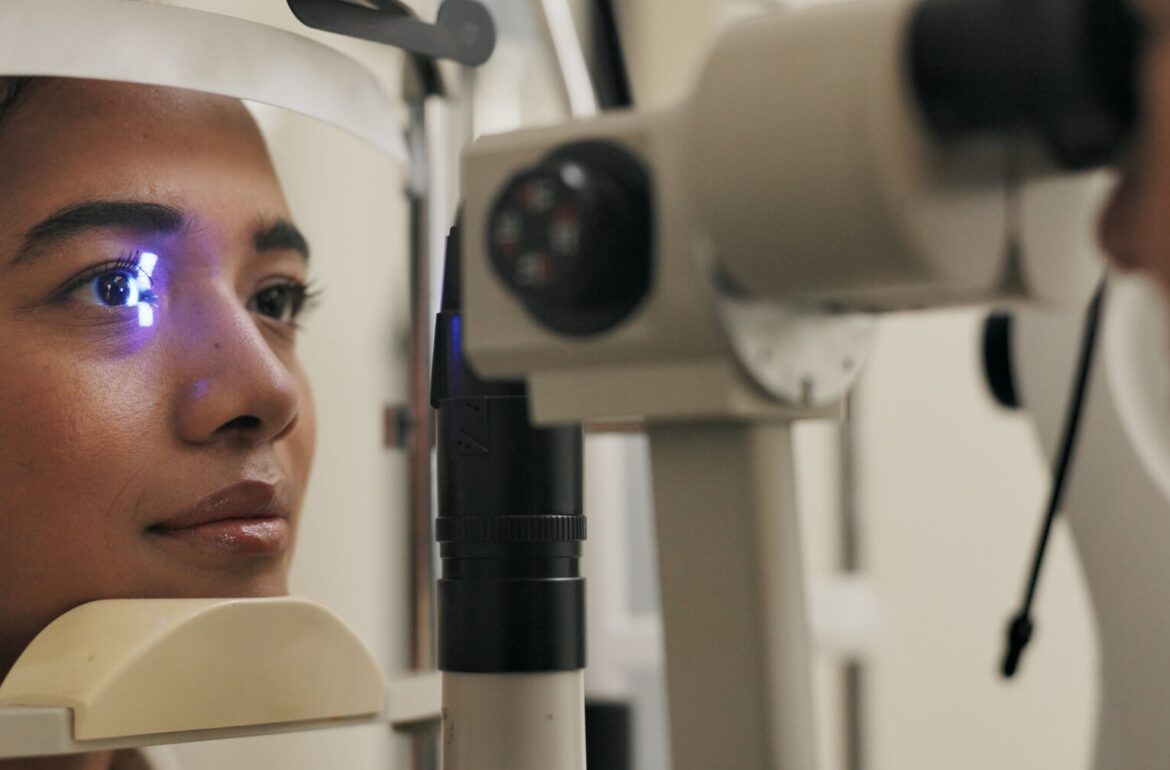
The good news is that checking for retinopathy is quick and painless. At Avant-Garde Optometry, our diabetic eye exams use Optomap imaging to capture detailed, stereoscopic views of the retina, so we can fully assess retinal health without instilling dilating drops.
We also measure intraocular pressure with the Topcon CT-80 and examine the front and back of the eye with a Topcon SL-D2 slit lamp. All of it syncs directly into your electronic health record.
For patients who prefer, or need, a traditional approach, we still offer standard dilation. But Optomap beats it on convenience alone. As I tell my patients, it’s the click of a button versus a five-hour stretch of squinting at bright lights afterward.
I’ve spent years digging into diabetic retinopathy research specifically so I can read these images accurately and explain what they mean in plain language, not medical jargon.
Schedule Your Diabetic Eye Exam in Frisco, TX
If you have diabetes, prediabetes, or a family history of either, don’t wait for a symptom to show up before getting checked.
Schedule a diabetic eye exam at Avant-Garde Optometry in Frisco, TX, and let us help catch problems while they’re still easy to manage.
Frequently Asked Questions About Diabetic Eye Exams
Q: Where is Avant-Garde Optometry located?
A: We’re at 9255 Dallas Pkwy, Ste 140, Frisco, TX 75033, conveniently near The Star, Stonebriar Centre, and Frisco Square, and we see patients from throughout Frisco and the surrounding North Dallas suburbs. See what our patients are saying about us — we’ve got an “Excellent” Google rating based on 256 reviews.
Q: Is a diabetic eye exam different from my regular comprehensive eye exam?
A: Yes. A comprehensive exam covers your overall eye health and prescription, including general screening for conditions like glaucoma and cataracts. A diabetic eye exam focuses specifically on the retina’s blood vessels, since that’s where diabetes-related damage shows up first.
Q: Does pregnancy change how often I need an eye exam if I have diabetes?
A: It can. The American Diabetes Association recommends an eye exam before pregnancy or in the first trimester for women with existing diabetes, with additional exams each trimester and up to a year postpartum if retinopathy is present.[4] Gestational diabetes carries its own elevated risk, so it’s worth asking your optometrist what schedule fits your situation.
Q: Can diabetic retinopathy be treated once it starts?
A: Yes, in most cases. Treatment options like laser therapy and anti-VEGF medications can stop retinopathy from progressing further, though they generally can’t undo damage that’s already happened.[5] That’s the whole case for catching it early.
Q: Who performs diabetic eye exams at Avant-Garde Optometry?
A: Dr. Jamie Yee and Dr. Roxana Pachecho both see diabetic and prediabetic patients in our Frisco office, and every patient gets a plain-language walkthrough of their results before leaving.
Q: Is a diabetic eye exam covered by insurance?
A: Usually, yes, though it’s typically billed to medical insurance rather than vision insurance, since it’s considered a medically necessary screening rather than a routine vision check. Our team can verify your specific benefits before your visit.