Frisco’s youth leagues, high school teams, and weekend rec players keep busy all year round, both on the field and on the court. But every swing, serve, and fast break carries a risk most parents and adult athletes don’t think about until it happens: eye injuries.
The good news? Most injuries are preventable. Here’s what to know about the risks and how to protect your eyes or your child’s.
What Are the Most Common Eye Injuries in Sports?
 More than 40% of eye injuries are caused by “sports or recreational activities,” and roughly 31,000 sports-related eye injuries are treated in U.S. emergency rooms treat every year. However, not every eye injury looks the same. A ball, elbow, or finger to the eye can cause a corneal abrasion (a scratch on the eye’s surface), a hyphema (bleeding inside the eye), or in more serious cases, an orbital fracture or retinal detachment.
In the U.S., basketball causes the most sports-related eye injuries overall, with baseball, softball, hockey, and swimming following close behind.
While basketball injuries tend to come from fingers and elbows during close contact, baseball and softball injuries come from the ball itself, which moves fast and is small enough to fit inside the orbital rim. Water sports and hockey carry their own risks too, from pool deck collisions to a puck or stick to the face. That’s exactly the kind of impact regular glasses aren’t built to handle. That’s exactly the kind of impact regular glasses aren’t built to handle.
Do Kids Need Prescription Sports Goggles?
Sports-related injuries make up about 24% of all children’s eye injuries. Which sport carries the most risk depends on age: baseball leads for kids 11 and under, while soccer and football lead for kids 12 and older.
Whether or not a kid needs prescription sports goggles depends on the severity of the prescription and the sport. If a child is extremely nearsighted, prescription sports goggles matter for both safety and gameplay. They simply can’t see the action well enough without correction.
When a Mild Prescription Still Calls for Sports Eyewear
A mild prescription doesn’t rule out the need for protection. Baseball is a good example. It requires full stereopsis (depth perception from both eyes working together) and smooth pursuit eye movements to track a small ball at high speed. Baseball asks for both skills at once, which is why we often recommend sports goggles or contacts for young players even with a mild prescription.
Do Adults Need Sports Goggles, Too?
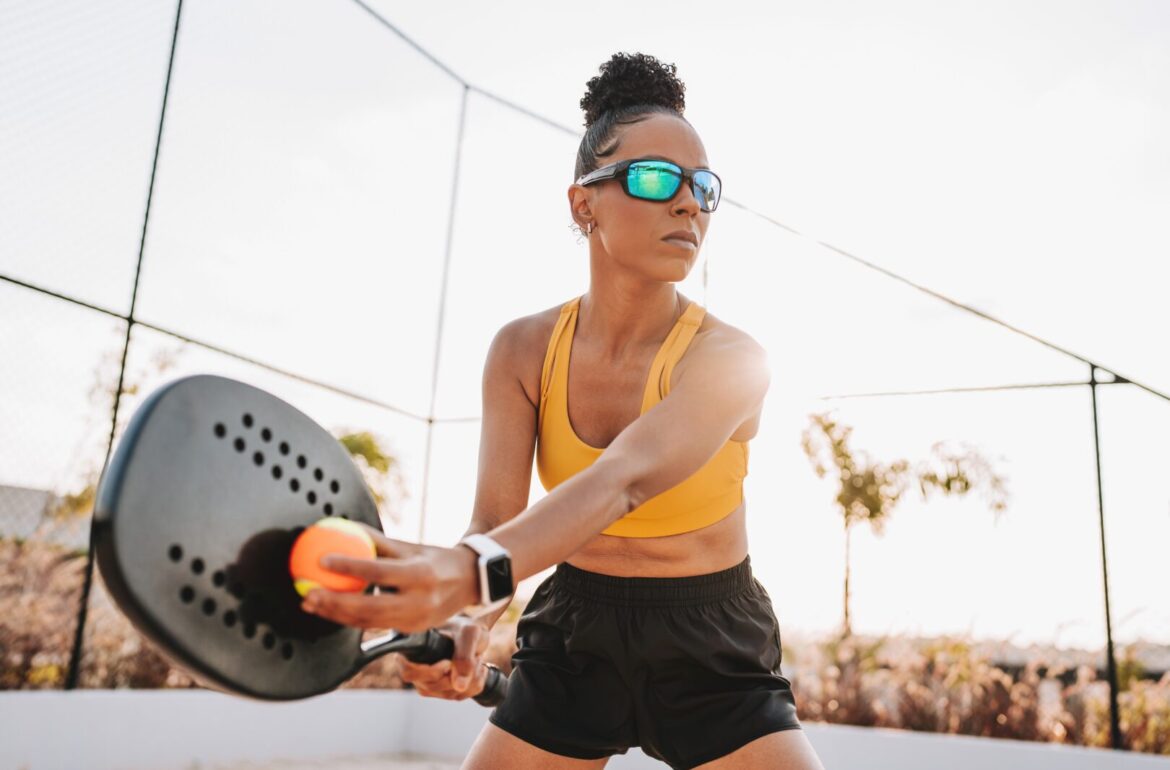
Kids aren’t the only ones at risk of eye injuries during sports activities. Adult rec leagues, pickleball courts, and tennis clubs across the Frisco, Texas area aren’t immune to these incidents either. Racquet sports put a small, fast-moving ball or shuttlecock right at eye level, and cycling and running can expose eyes to debris and UV glare.
Prescription sports goggles let adult athletes see clearly and stay protected without swapping between contacts and backup glasses mid-game. For sports like basketball, baseball, tennis, and pickleball, they’re worth the investment even for adults with a mild prescription.
When Can Regular Eyeglasses Be Worn as Protection in Sports?
Regular eyeglasses can work, but only in non-contact sports such as tennis, bowling, badminton, and archery. Sports with direct physical contact, like football, soccer, and basketball, put your eyeglasses (and your eyes) at much higher risk of impact.
Even in non-contact sports, standard lenses and frames aren’t tested for high-velocity impact the way sports eyewear is. The ASTM F803 standard is the benchmark manufacturers use to certify eye protection for sports, dividing protective eyewear into four types based on design – from molded one-piece lenses to full face shields – and requiring lenses to withstand impacts of up to 90 mph. Everyday frames simply aren’t built to that spec.
Warning Signs of a Serious Eye Injury
Some eye injuries are obvious immediately — heavy swelling, visible bleeding, or a direct hit to the socket are hard to miss. Others take longer to show themselves.
Eye pain is the most prominent warning sign, but don’t ignore blurred vision that isn’t improving. Both can signal something more serious than a minor bump.
When to See an Eye Doctor After Being Hit in the Eye With a Ball
You should see an eye doctor immediately if you notice any of the following after an impact:
- Ocular redness
- Eye soreness
- Blurred vision
- Eye pain
- Light sensitivity
- Ocular discharge
Do not wait to see if symptoms improve on their own. Some injuries, like a hyphema or retinal detachment, need prompt treatment to prevent lasting or irreversible vision loss.
How to Choose Prescription Sports Eyewear
The right pair of sports eyewear should feel secure enough that you forget you’re wearing it once the game starts. Before purchasing, ask:
- Does it fit comfortably underneath a helmet or hat, if you wear one?
- Does it slide down your nose when you sweat or shake your head?
- Is it centered on your face and comfortable enough to forget about?
Fit matters as much as the lens itself. Nearly 90% of serious sports-related eye injuries are preventable with the right protective eyewear, but only when that eyewear actually stays in place during play.
Schedule a Sports Vision Exam in Frisco, TX
Whether you’re outfitting a young athlete for Little League or picking up pickleball for the first time, a sports vision exam can confirm the right prescription and fit before game day. Our Frisco office serves athletes throughout Collin and Denton counties, including Frisco, The Colony, Little Elm, and Plano.
Schedule a sports vision exam with Avant-Garde Optometry, and get properly fitted before you’re back on the field.
Frequently Asked Questions About Sports Eye Injuries
Are sports goggles necessary for kids?
It depends on the prescription and the sport. Kids with a strong prescription typically need sports goggles for safety and performance. Even kids with a mild prescription may need them for sports like baseball, which demand sharp depth perception and eye tracking.
What sports have the highest risk of eye injuries?
Basketball causes the most sports-related eye injuries overall. Age plays a role for kids specifically; younger children (11 and under) are injured most often playing baseball, while those 12 and up see more injuries in soccer and football.
Can regular eyeglasses protect my eyes during sports?
Regular eyeglasses only offer protection in non-contact sports like tennis, bowling, badminton, and archery. Contact sports like football, soccer, and basketball call for eyewear certified to the ASTM F803 impact standard instead.
What does a sports vision exam include?
A sports vision exam builds on a standard prescription check with tests for depth perception, eye tracking, and reaction time, then matches you with sports eyewear fitted to your sport and face.
Where is Avant-Garde Optometry located?
Avant-Garde Optometry is located at 9255 Dallas Pkwy, Ste 140, Frisco, TX 75033, near The Star and Stonebriar Centre.